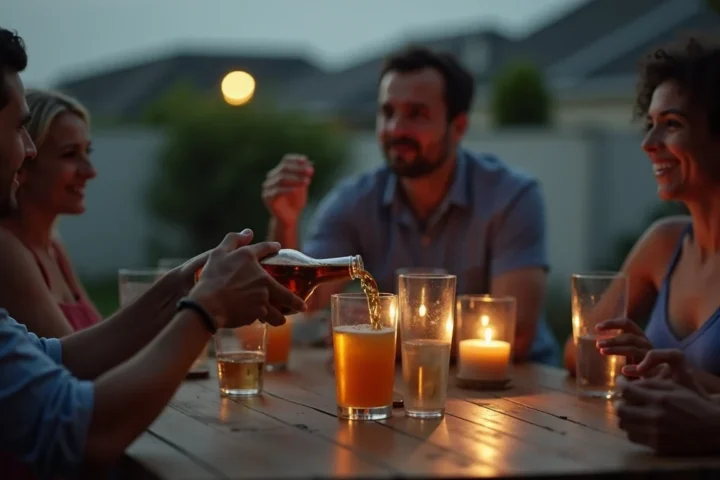
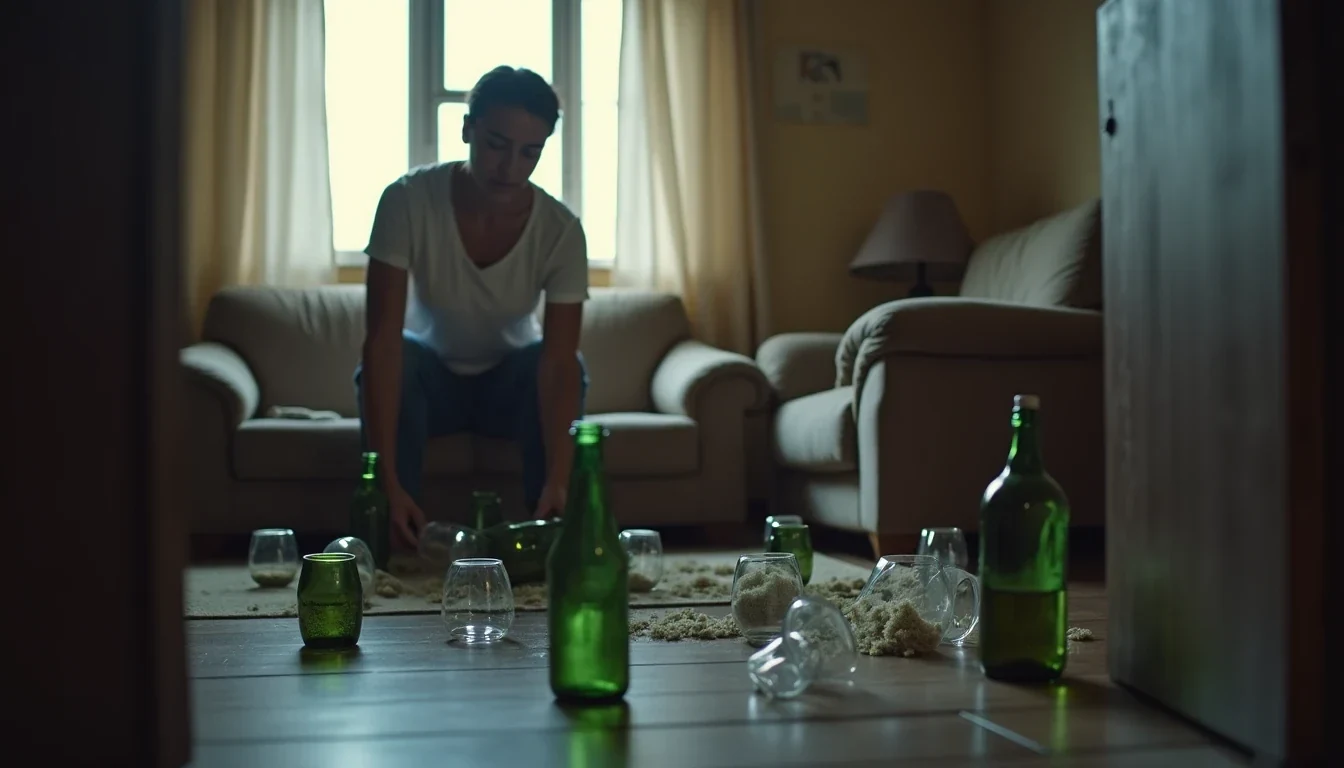
The first warning sign is often unglamorous: a missed work call after a long Sunday, a spouse cleaning up another night that was supposed to be “just a few drinks,” a hospital discharge after a blackout, with nobody quite saying aloud that the drinking has stopped being social and started running the household.
Most people do not wake up one morning and announce that they have crossed into addiction. The line gets crossed in ordinary scenes, over and over, until drinking is no longer something a person chooses for pleasure. It becomes the thing they plan around, hide, defend, or use to get through the day.
The line is crossed when alcohol changes jobs
Social drinking has a simple job. It sits in the background of a braai, a wedding, a derby, a payday, a Friday night in a tavern, a Sunday lunch with friends. People drink, the night ends, and life keeps moving.
Problem drinking begins when alcohol starts doing other jobs. It becomes a way to steady nerves, blunt anger, dull grief, make sleep happen, or take the edge off a morning that already feels too heavy. Once someone is drinking to feel normal rather than to enjoy themselves, the pattern has changed.
In South African settings, routine often disguises that shift. Weekend binge drinking is normalized in many circles. Someone may hold it together from Monday to Thursday, then disappear into a hard Friday-to-Sunday cycle that leaves them shaky, irritable, and unavailable by Monday morning. A person can look functional from the outside and still be sliding toward dependence on the inside.
The social setting can hide the damage. Taverns and shebeens are not automatically a problem, but they make it easy for heavy drinking to feel ordinary. So does the habit of measuring alcohol use by the occasion rather than by the cost. If the story is always “it was a celebration,” while the consequences keep repeating, the celebration has become a cover.
If alcohol is now deciding the shape of the day, it has already stopped behaving like a casual habit.
The body starts giving the truth away
The body is usually less polite than the person drinking. Tolerance rises first. The amount that once produced a buzz no longer does the job, so the person drinks more. What used to feel like “a few” becomes half a bottle, then a bottle, then whatever is available. This is adaptation, not sophistication.
Withdrawal is the louder warning. When drinking drops, the body objects. Tremors, sweating, nausea, anxiety, insomnia, and a pounding sense of dread can follow. Some people drink again not because they want to get drunk, but because they want the shakes, panic, and sickness to stop. This is dependence.
Loss of control usually comes next, although families often notice it before the drinker does. The person promises to stop after two. They keep going. They promise to skip this weekend. They do not. They promise to have a quiet night. They end up waking somewhere they did not intend to be, with a wallet lighter, a phone missing, or no memory of how they got home.
Drinking stops being occasional and starts becoming compulsive at this point. The pattern is no longer about taste, company, or mood. It is about repetition, and repetition is doing the work of a drug.
Another red flag is the shrinking of a person’s life around alcohol. Friends, sport, church, family time, hobbies, even work commitments begin to fall away because drinking keeps taking priority. A person who used to show up starts disappearing from their own life. This is the narrowing effect of addiction.
Denial arrives before honesty does
By the time a family is worried, the drinker often has a polished set of explanations. The job is stressful. The week was brutal. Everyone drinks this much at weddings. It is only on weekends. It is only beer. It is only after work.
Those lines delay the real question of whether alcohol is causing more harm than it is worth. Denial rarely looks dramatic. It looks practical. It sounds like a person trying to keep things calm. In practice, it keeps the problem alive.
A few psychological shifts matter.
Craving is one. The mind starts circling alcohol before the first drink has even been poured. The person thinks about when they can get it, where it will come from, who will notice, how much they can have, and how to make the next drink happen without questions.
Using alcohol to cope is another. A person who once drank to socialise begins drinking to survive ordinary feelings. Stress, shame, loneliness, boredom, and old trauma all become triggers. Alcohol does not solve those states. It delays them, then returns them with interest.
A third shift is the loss of honesty, not just to others, but to oneself. The person underplays how much they drank, hides bottles, deletes messages, or rewrites events to make them sound less serious. This secrecy is often the earliest proof that the drinking is no longer under control.
Families also get pulled into the pattern. Partners cover for missed obligations. Parents smooth over consequences. Friends laugh off behaviour that used to worry them. Enabling can look like loyalty, but it usually gives the drinking more room to spread.
Why some people slide faster than others
Nobody becomes dependent on alcohol for one reason only. Genetics, brain chemistry, mental health, trauma, social pressure, and access all feed into the same problem.
Family history matters. If alcohol use disorder runs in the family, the risk is higher. Some of that risk is inherited. Some of it is learned behaviour. Most families carry both.
The brain changes too. Alcohol repeatedly pushes on the reward system, then dulls the very circuits that help with judgment and self-control. Over time, the prefrontal part of the brain, the bit that helps people stop, plan, and measure consequences, gets less reliable. The person knows the damage and keeps drinking anyway.
Mental health problems make the slide steeper. Depression, anxiety, bipolar disorder, PTSD, and unresolved trauma often sit underneath heavy drinking. In a country where many people have lived with violence, neglect, gender-based abuse, and chronic stress, alcohol is often used as self-medication. It works for an hour. Then it worsens sleep, mood, and panic, which pushes the person back to the bottle.
Age matters too. Starting young raises the risk. A first drink before 15 is a serious warning sign, because the adolescent brain is still developing and the habit can embed itself before a person has any real sense of consequences.
Social pressure does its own damage. In some groups, heavy drinking is the price of belonging. In others, it is part of masculinity. In others still, it is wrapped in the performance of success or freedom. Women are not exempt from this pattern. Problem drinking among women has become more visible in urban areas, where changing norms and easy availability have lowered the social cost of heavy use.
The local reality makes the problem easier to miss
Alcohol is easy to find, easy to hide, and easy to normalise. That combination is dangerous.
The legal drinking age is 18, but enforcement is uneven enough that many teenagers do not have to work very hard to get alcohol. Add cheap access, aggressive marketing, taverns, shebeens, and a weekend culture that treats binge drinking as standard behaviour, and the line between recreation and dependency gets blurred early.
The old South African history around alcohol also still casts a shadow. The legacy of the dop system and the broader damage caused by social and economic dislocation did not disappear because the policy ended. In some communities, the patterns of coping, escape, and intergenerational harm are still visible.
Economic pressure sharpens the risk. Unemployment, poverty, and instability make alcohol feel like relief. It is a false relief, but it is immediate, and that is why it works so well as a trap. When someone is under financial strain, drinking can start as a break from pressure and end as another source of it.
This problem often sits in plain sight because the drinking looks ordinary when the surrounding life is already under strain. People assume stress explains everything. It does not. Sometimes stress is the first cause. Sometimes it is the first consequence.
What to do when the signs are hard to ignore
A person who suspects their drinking is becoming a problem does not need a dramatic speech. They need a sober look at patterns.
An AUDIT questionnaire can help turn vague worry into something measurable. A local GP can also assess drinking honestly, check for withdrawal risk, and decide whether stopping should happen at home, with medication, or under medical supervision. Heavy or long-term drinkers can become seriously ill if they stop suddenly.
If you are worried about someone else, keep the conversation specific. Talk about what you saw, not what you assume. “You were drunk at work drinks and missed the school run” lands better than “you have a problem.” The first is observable. The second invites a fight.
For the person drinking, the first practical move is to reduce access. Clear alcohol out of the house. Stop stocking it for guests. Do not keep “just in case” bottles around if they are really for relapse. Tell one trusted person what is happening so the silence does not do the hiding for you.
A family should also stop making rescue the default. Paying the fine, phoning in sick, lying to the children, or covering the consequences can keep the drinking alive longer than anyone intends.
If withdrawal symptoms are already appearing, do not improvise. Tremors, confusion, vomiting, hallucinations, seizures, or severe agitation need medical attention. The body can become dangerous quickly when alcohol is withdrawn after dependence has set in.
> Emergency signs that need urgent help: > – Seizures > – Confusion or disorientation > – Hallucinations > – Severe shaking > – Repeated vomiting > – Chest pain > – Uncontrolled aggression or suicidal talk
Treatment is not one thing
People often talk about rehab as if it were a single door. It is not. Treatment ranges from outpatient counselling and GP-led support to detox, inpatient rehabilitation, and long-term aftercare.
Outpatient care can work when the person is stable, supported, and not at high withdrawal risk. Inpatient treatment is usually better when drinking is severe, relapse has been frequent, home life is chaotic, or the person needs space away from daily triggers. Detox deals with the body. Therapy deals with the habits, denial, shame, and coping style that kept the drinking going. Aftercare deals with how to stay well once the crisis has passed.
Private treatment can be expensive, and medical aid cover is often narrower than families expect. Some plans help with short stays or limited psychiatric benefits. Provincial services can offer a route in, but waiting times and access vary. That gap leaves many families stuck between delay and debt. Early action is better than waiting for a collapse that costs more.
Support groups matter too. Alcoholics Anonymous meetings can give structure and contact with people who know the pattern from the inside. They are not a replacement for medical care when withdrawal or severe dependence is present, but they help reduce isolation, and isolation is where relapse likes to grow.
The person who keeps asking, “How bad does it have to get?” is usually already past the point where the answer is comfortable. If drinking is causing blackouts, hiding, missed responsibilities, relationship damage, withdrawal, or repeated promises that never hold, the line has already been crossed. The next move is action.
Questions worth asking now
- Has alcohol become the reason for a weekend, rather than the addition to one?
- Are there blackouts, lies, or gaps in memory after drinking?
- Is the person drinking to cope, calm down, or feel normal?
- Have friends or family started complaining, covering, or warning?
- Does stopping lead to shaking, panic, sweating, or insomnia?
- Has work, parenting, study, or relationships started to bend around alcohol?
If several of those are true, the issue is no longer about social drinking. It is about a pattern that is taking control, and that pattern usually gets worse before anyone admits it is real.